

D2C fulfillment is usually framed as a choice: build a warehouse, or hand the work to a third party logistics provider. For most brands, that framing is too narrow. Many already have part of the answer in place: a distribution center or two, a 3PL relationship, and distributors that already carry their products across the country. The opportunity is not choosing one of these. It is running all of them as one ecommerce network, and adding capacity only where it's needed.
Your ecommerce network has two sides
Every brand's ecommerce network has a demand side and a fulfillment side. The demand side is every place the brand sells: its own website, marketplaces such as Amazon and Walmart, and its retail partners' sites. The fulfillment side is every location that can ship an order: the brand's own distribution centers, its 3PLs and its distributors. Many brands manage these separately, one system and one relationship at a time. Running them as one network means a single view of inventory across every location, and one set of rules deciding where each order ships from.
What your fulfillment network might include
There is no standard footprint. One brand's fulfillment network might include:
- A distribution center or two of its own, connected so they ship ecommerce orders as locations on the network
- A 3PL it already has a relationship with
- One or more distributors that already carry its products in regions the brand can't reach quickly on its own
Each piece does what it's best at. Connected through the right software, such as the Etail Vantage Platform (EVP) from Etail Solutions, they work together as one network instead of separate operations.
“Every brand's network looks different. One might have its own DC, a 3PL and two distributors. Another might start with one distributor in one region. The point isn't to pick one answer. It's having options, and options are strength,” said Michael Anderson, CEO and co-founder of Etail Solutions, the company behind The Distribution Network.
.png)
Start with the map
The practical question is not which fulfillment model to choose. It's which parts of the country the current footprint can't reach on time, or can't reach at a reasonable delivered cost. A brand with one distribution center on the East Coast may serve its own region well and struggle to reach the West Coast in two days. That gap is where additional capacity earns its place, whether it comes from a 3PL location or a distributor.
Where distributors fit
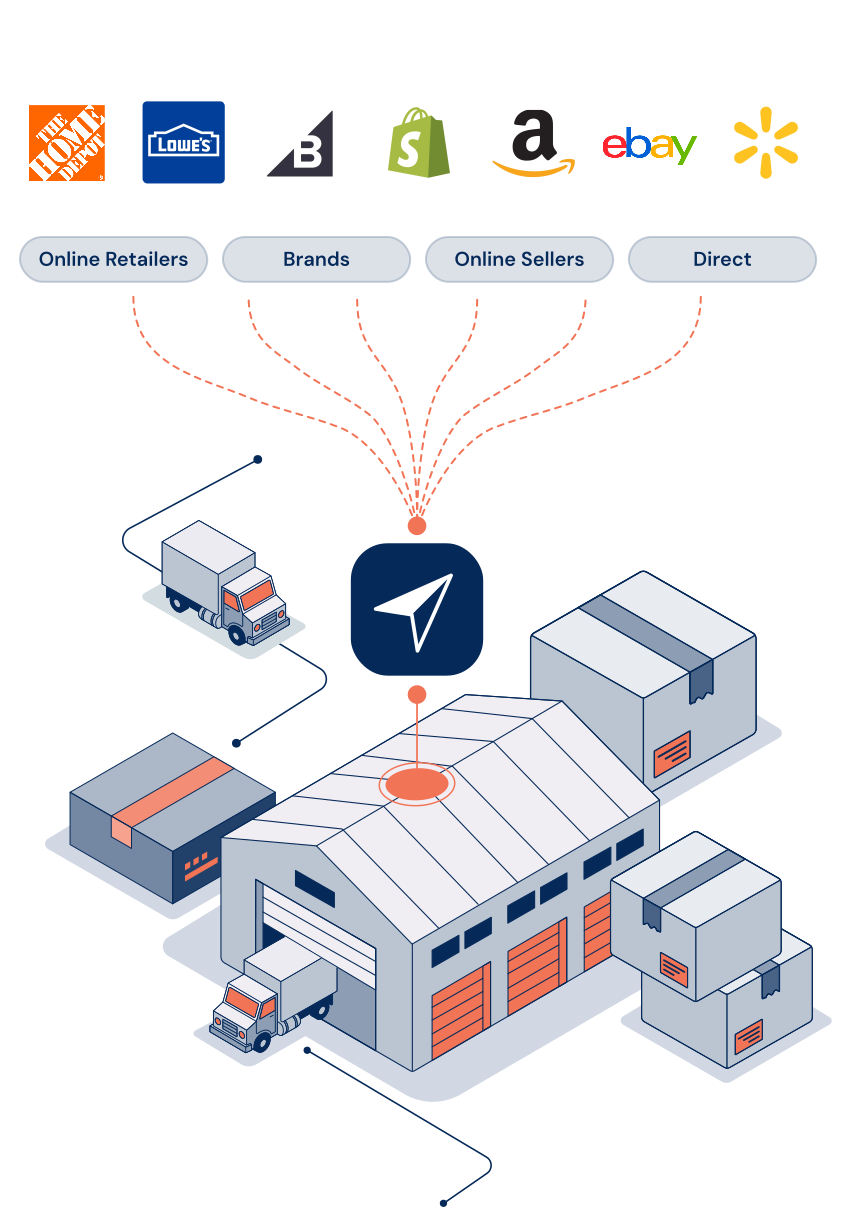
A brand's distributors already hold inventory, already ship product to their own customers, and already know the products well. In regions where the brand has no facility of its own, they can fulfill online orders from stock already on their shelves, without a new lease, a new hire, or a new vendor relationship to build from nothing. The Distribution Network (TDN), operated by Etail Solutions, extends a brand's network in this way, connecting it to distributors who can fulfill its orders from inventory they already carry. Distributors don't have to be the entire solution. One distributor covering one region can be enough to close a gap.
“If you sell through distributors, the capex has already been spent. The buildings are there, the inventory is bought and placed, the people are hired. Before building another warehouse or signing another 3PL contract, it's worth asking a simple question: why not use what's already there?” Anderson said.
.png)
Yes, this is drop shipping. Here's what's different.
When a distributor fills an online order for a brand, it is drop shipping in the strict sense: the brand sells the product and remains the seller of record, and the distributor ships it directly to the consumer from its own inventory, on the brand's behalf. Drop shipping between manufacturers, distributors and the businesses they supply is a long-established practice in wholesale distribution. When most people hear the term today, they think of a third-party reseller on a marketplace that doesn't own inventory and has a distributor ship its orders. That model exists, and some resellers run it very successfully. This is different in one important way: the brand holds the seller of record position and controls how its products go to market.
“When a customer buys, they're technically buying from the brand. The brand is working with its existing customers, the distributors it already knows and trusts, to do the fulfillment. It's a much higher-quality approach to drop shipping,” Anderson said.
How orders route across your whole network
When an order comes in, routing works across every connected location: the brand's own distribution centers, its 3PL and its distributors. First, it checks which locations have the item in stock. Then it rate shops carriers and service levels from each of those locations, using the brand's own negotiated carrier accounts if preferred, and selects the lowest delivered cost that still reaches the customer on time. Tracking flows back to the sales channel automatically, and the customer sees the brand as the seller, whichever location shipped the order.
It's not all or nothing
Adding a distributor doesn't mean closing a warehouse or ending a 3PL contract. A brand can start with one distributor in one region, see how those orders perform, and add more locations from there. Every brand's footprint will look different, and it can change as the business grows. What matters is having options, and the ability to run them together.
Coverage, in practice
Coverage depends greatly on the individual brand and the footprint of its distributors. That said, there are examples in the hardlines industry of brands reaching 2-day ground coverage of up to 96% of the US population, combining their own locations with distributors already present in their supply chain rather than building new warehouses to get there.
Frequently asked questions
Do I have to choose between my own warehouse, a 3PL and distributors?
No. Many brands' networks combine all three. Each location handles the orders it's best positioned to fill.
Can my own warehouse be part of the network?
Yes. With the right software, a brand's own distribution centers ship ecommerce orders alongside its 3PL and distributors, under the same routing rules.
Do distributors have to cover the whole country?
No. Many brands use distributors to fill specific regions their own locations can't reach on time or at a reasonable cost.
Do I have to move inventory out of my 3PL?
No. Your 3PL stays part of your network. Distributors add reach where you need it; they don't replace what already works.
How does an order decide where to ship from?
Routing first finds every connected location with the item in stock, whether that's your own DC, your 3PL or a distributor. It then rate shops carriers and service levels from each, using your own carrier accounts if you prefer, and picks the lowest delivered cost that still meets the delivery promise.
Is this the same as a dropship network?
When a distributor fills the order, yes in one sense: it ships directly to the consumer on the brand's behalf. The difference is control. The brand stays the seller of record and decides how its products go to market, and orders route only to distributors already working with the brand.
Does this create new demand for my brand?
Not on its own. It makes existing demand faster and less expensive to fulfill. Faster delivery can help conversion, but this is not a demand generation tool.
Who provides this?
Etail Solutions. Its Etail Vantage Platform (EVP) runs a brand's ecommerce network, from sales channels to every fulfillment location. The Distribution Network (TDN), operated by Etail Solutions, extends that network by connecting brands to distributors already carrying their products.