
Growth is exciting – until your ecommerce fulfillment starts cracking under pressure. Orders pile up, warehouses fill, and customer expectations don’t stop climbing. Every late shipment chips away at your brand promise. That’s when many operations leaders face the same question: keep struggling to scale ecommerce fulfillment in-house, or find an ecommerce fulfillment partner that helps you grow faster and smarter?
This guide breaks down when to outsource ecommerce fulfillment, how to choose the right ecommerce fulfillment partner, and pitfalls to avoid as you scale.
What Is Ecommerce Fulfillment?
Ecommerce fulfillment is the process of storing, picking, packing, and shipping online orders to customers. It’s the behind-the-scenes engine that turns a “Buy Now” click into a delivered product – and it becomes a defining factor in your brand’s ability to scale.
More than 98% of shoppers say their fulfillment experience affects brand loyalty.
How important is ecommerce fulfillment? According to a survey by Convey, a delivery experience management provider, 98.1% of US online shoppers surveyed said their delivery experience affects brand loyalty. Get it wrong, and 83.5% said they wouldn’t buy from the seller again after a negative delivery experience.
Most brands start fulfillment in-house. Maybe it’s a corner of a warehouse or another small, dedicated space with a few packing stations. But as order volume grows, fulfillment quickly becomes more complex. Costs rise, systems strain, and operational focus shifts from efficiently shipping parcels to constant firefighting.
Centralized vs. Distributed Ecommerce Fulfillment
When creating an ecommerce fulfillment strategy, there are two basic approaches:
Centralized fulfillment means managing all inventory and shipping from one main location. Many brands start this way because it’s simpler to control operations, staffing, and inventory visibility. It keeps costs predictable when order volumes are moderate, and it simplifies training and quality control. However, as your customer base expands across the country, shipping from a single warehouse can lead to higher shipping costs, longer delivery times, and more strain on carriers.
Distributed fulfillment spreads inventory across multiple strategically located facilities – often through a network of regional or partner warehouses. The distributed ecommerce fulfillment model shortens the distance between products and customers, cutting shipping costs and enabling affordable two-day or even next-day delivery for most orders. Distributed fulfillment is powered by technology that syncs inventory across sites, automatically routes orders to the best location, and manages returns efficiently. It’s the preferred approach for brands aiming to meet customer expectations for 1-2 day delivery while still protecting margins.
When You Know It’s Time to Scale Ecommerce Fulfillment

You don’t need to guess when to make the shift – it shows up in the data and in your team’s daily stress. Here are the clearest signals:
- Rising order volume and fulfillment errors. As volume increases, error rates creep up. Late shipments, mispicks, and backorders become recurring problems.
- High shipping costs and slow delivery times. You can’t compete on speed or cost because your fulfillment center isn’t near enough to customers.
- Seasonal spikes strain your team. Each Q4 feels like survival mode instead of a growth opportunity.
- Leadership distraction. You’re spending more time solving fulfillment issues than driving revenue.
When these symptoms appear, outsourcing fulfillment stops being a cost – it becomes a strategy to enable revenue and margin growth.
Comparing Ecommerce Fulfillment Options
Not all fulfillment models are created equal. The best choice depends on your growth stage, product mix, and goals. As a basis of comparison, let’s start with where most brands start – fulfilling orders in-house.
In-House Fulfillment
In-house fulfillment means your business owns or leases the warehouse space, manages inventory, hires staff, and controls all aspects of order processing. This model gives you full operational control – how products are stored, picked, packed, and shipped. Many brands start here because it allows them to manage quality directly and build hands-on processes that reflect their brand’s standards. But as order volume grows, running your own warehouse becomes resource intensive. It demands continuous investment in labor, systems, and space, especially when customer expectations for speed and accuracy keep rising.
Advantages:
- Full control over operations and customer experience.
- Easier to customize packaging and branding.
- Direct line of sight into inventory and performance.
Limitations:
- High fixed costs (space, labor, equipment).
- Costly and risky to add additional warehouses or distribution centers to meet geographic demand.
- Harder to scale quickly for seasonal or unexpected demand.
- May require investment in new order, inventory, and warehouse management systems as the number of fulfillment locations increases.
Using retail locations is another take on in-house fulfillment – leveraging current assets like retail stores as fulfillment centers.
Retail Stores (Pick-Up or Ship from Store)
Using retail stores as mini fulfillment centers has become a powerful omnichannel strategy. It allows customers to buy online and pick up in-store (BOPIS) or receive shipments sent directly from local stores. Retail locations act as micro-warehouses, enabling faster local delivery and improving inventory utilization. This model can improve store ROI by turning them into logistics assets, especially for retailers with multiple locations in urban areas. However, it relies heavily on accurate, real-time inventory visibility and requires store staff to handle fulfillment tasks efficiently.
Advantages:
- Reduces shipping distance and costs.
- Increases store ROI by turning locations into hybrid assets.
- Offers convenient pickup options for customers.
Limitations:
- Requires a retail footprint.
- Demands tight inventory visibility across stores.
- Will require additional order and inventory management capabilities, plus carrier selection and shipping software for each retail location.
- Staff training and space constraints can limit efficiency.
Once you decide it’s time to scale beyond in-house operations, the next challenge is choosing the right fulfillment model for your brand. Here are the options.
Marketplace Fulfillment (Amazon FBA, Walmart WFS)
Marketplace fulfillment programs like Amazon FBA (Fulfillment by Amazon) or Walmart WFS (Walmart Fulfillment Services) handle your storage, packing, and shipping for orders placed on their platforms. Both Amazon and Walmart also offer programs to fulfill orders not placed on their platforms. You ship inventory to their fulfillment centers, and they manage the rest – often with same-day or two-day delivery.
This approach simplifies logistics for marketplace orders and boosts visibility by qualifying for premium delivery badges. However, you sacrifice brand control and flexibility, and the storage costs can add up quickly for slow-moving products. Marketplace fulfillment works best for sellers heavily focused on the Amazon or Walmart sales channels or those wanting fast delivery without building their own logistics infrastructure.
Advantages:
- Fast delivery using marketplace logistics networks.
- Simplified operations for marketplace sales.
- Access to “Prime” or “2-day” badges that boost conversions.
Limitations:
- Limited brand control over packaging and experience.
- High fees and storage costs for slow-moving products.
- Not suitable for some products such as large, bulky, or valuable items or products requiring special handling.
- Program rules, fees, and restrictions change often – and often with little advance notice.
3PLs (Third-Party Logistics Providers)

A 3PL is an independent logistics provider that manages fulfillment operations for multiple clients. You send your inventory to the 3PL’s warehouse, and they handle storage, order processing, packing, shipping, and returns on your behalf. Many 3PLs also offer value-added services like kitting, subscription box assembly, or special packaging. The main benefit of a 3PL is scalability – you get professional logistics capabilities without having to own the infrastructure. This allows your internal team to focus on sales, marketing, and growth. However, success depends on choosing a 3PL with the right technology integrations, transparency, and performance standards.
Advantages:
- Scalable infrastructure without capital investment.
- Expertise in operations, shipping, and returns.
- Flexible storage and shipping options across regions.
- Ability to handle special requirements such as cold storage and delivery.
Limitations:
- Service quality and tech integration vary widely.
- Slow onboarding and expensive integration ramp-up are common – especially if extensive sales channel integration is required.
- Less direct control over operations and customer touchpoints.
- Requires strong partnership and oversight.
Distributor Networks
Many brands rely on regional distributors to stock inventory and supply local retailers, resellers, or wholesalers. These independent distributors already have inventory, warehouses, and logistics in place – but until now, there was no efficient way to unify them for nationwide ecommerce fulfillment.
The Distribution Network (TDN) changes that. It’s a technology-enabled model powered by Etail Solutions that connects regional distributors into a single, coordinated nationwide network. Instead of adding new warehouses or outsourcing to a traditional 3PL, TDN uses the inventory and infrastructure distributors already hold. Orders are automatically routed to the closest distributor for 1–2 day delivery, lowering shipping costs and shortening delivery times.
TDN gives brands nationwide reach with no incremental infrastructure investments, while distributors gain new ecommerce revenue streams and better use of their assets. The result is a scalable, flexible fulfillment model that blends local execution with national performance – turning existing distributors into an integrated ecommerce fulfillment network.
Advantages:
- Eliminates costly investments in warehouses, staff, or 3PLs.
- Lowers shipping costs by fulfilling closer to the customer.
- Supports both ecommerce and retail drop shipping.
- Preserves brand control and direct customer experience.
- Protects retail and distributor relationships – avoids channel conflict.
Limitations:
- Requires participation from regional distributors.
- Fulfillment quality may vary by distributor; strong SLAs and oversight are critical.
- Not all distributors may join TDN, but usually only 3–4 are needed to achieve 1–2 day nationwide coverage.
- May require changes to inventory placement and forecasting discipline.
What to Look for in an Ecommerce Fulfillment Partner
Choosing the right partner isn’t just about price – it’s about capability, transparency, and alignment with your growth goals.
Nationwide or Regional Warehouse Coverage
Coverage determines your delivery promise. Look for a network that puts inventory close to your customers. Two-day delivery should be achievable without expedited shipping.
Real-Time Inventory Tracking
Inventory visibility is non-negotiable. Your partners should provide real-time updates across all channels, helping you prevent overselling and stockouts.
Seamless Integration
Your fulfillment system must integrate cleanly with your ecommerce platform, marketplaces, and ERP. Poor integration adds delays and errors that cost you customers.
Transparent Pricing and SLAs
Hidden fees erode margins. Demand a clear cost breakdown – storage, pick-and-pack, packaging, and shipping – and service level agreements (SLAs) with defined metrics.
Data Visibility and Predictive Analytics
The best fulfillment partners go beyond operations – they provide insight. Predictive analytics can forecast demand, optimize inventory placement, and reduce costs over time.
The Tools and Technologies That Power Scalable Ecommerce Fulfillment
Outsourcing fulfillment is only half the equation. The other half is managing your partners, systems, and data seamlessly. That requires the right technology stack – the tools that connect every piece of your fulfillment ecosystem into a single, data-driven operation.
Distributed Inventory Management (DIM)
Distributed inventory management software gives you real-time visibility into stock across multiple warehouses, stores, and 3PLs. It ensures that every channel – direct to consumer (D2C), marketplace, or wholesale – has an accurate picture of available inventory. It also enables smart replenishment, so you’re always stocked where demand is highest, without overloading a single location.
Distributed Inventory Management and Distributed Order Management systems work together to scale successful multi-location ecommerce fulfillment.
Distributed Order Management (DOM)
Distributed order management systems automatically decide where to fulfill each order based on proximity, inventory availability, shipping cost, and service-level rules. It’s the brain of a distributed fulfillment network, orchestrating orders across multiple nodes and partners. For fast-scaling brands, DOM is the key to achieving consistent delivery times and optimizing fulfillment costs at scale.
Advanced Integration Capabilities
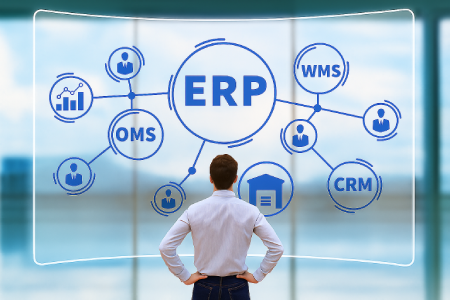
Fulfillment depends on clean, real-time data flow. Look for integration platforms or APIs that connect your ecommerce platform, marketplaces, ERP, and other legacy systems, and analytics tools. Advanced integrations reduce latency, eliminate manual work, and create a synchronized ecosystem where every order, return, and adjustment is reflected instantly.
Single Source of Truth Analytics and Reporting
You can’t manage what you can’t measure. Centralized ecommerce analytics tools unify data from all fulfillment partners into one dashboard – showing performance metrics, SLA compliance, inventory turnover, and shipping cost per order. A true “single source of truth” allows operations teams to spot inefficiencies, model future demand, and make data-driven decisions that improve both speed and margins.
Automation and Exception Management
As you scale, ecommerce automation becomes essential. The right systems automatically flag exceptions – missing inventory, delayed shipments, or integration errors – so your team can focus on solving problems instead of searching for them. Exception management tools reduce manual intervention, improving accuracy and responsiveness across your network.
Predictive and Prescriptive Analytics
Modern fulfillment platforms offer insights that predict demand surges, identify SKU-level trends, and recommend optimal fulfillment locations. These tools help you plan smarter, allocate inventory more efficiently, and stay ahead of customer demand without overstocking.
In short, the right tech stack transforms fulfillment from a fragmented process into an orchestrated ecosystem – one that scales smoothly across partners, channels, and regions.
Common Mistakes to Avoid When Choosing an Ecommerce Fulfillment Partner
Even experienced operators fall into these traps when scaling fulfillment.
Picking the Cheapest Provider
Low-cost providers often cut corners on service or technology. Short-term savings turn into long-term pain when orders go wrong or data isn’t reliable.
Integrating with legacy systems is critical to ensuring that your ecommerce fulfillment strategy scales.
Ignoring Integration Complexity
Fulfillment depends on data flow. If your systems don’t sync cleanly, every step – from order import to return processing – creates friction. Pay special attention to ensure that your partner's systems work with your ERP and other legacy systems. Legacy systems often don’t work well with cutting-edge ecommerce software – but the rest of your organization depends on them.
Failing to Model Future Growth
Your fulfillment needs today aren’t your needs a year from now. Choose a partner that can scale volume, SKUs, and geographic reach as your business grows.
Not Defining KPIs or Service Benchmarks
Set measurable expectations before signing – order accuracy, on-time shipping, inventory accuracy, and customer satisfaction. If you can’t measure it, you can’t manage it.
Overlooking Post-Purchase and Returns Experience
Fulfillment doesn’t end at delivery. Returns are a major touchpoint for customer retention. Make sure your partner has an efficient, customer-friendly return process.
Key Takeaways for Scaling Ecommerce Fulfillment
- Scaling fulfillment isn’t about shipping – it’s about enabling growth.
- The right fulfillment partner turns logistics from a cost center into a competitive advantage.
- Distributor networks are redefining ecommerce scalability.
- The right technology stack keeps every partner aligned, data unified, and operations scalable.
Scaling ecommerce fulfillment isn’t about outsourcing a problem – it’s about unlocking potential. The brands winning today treat fulfillment as a growth lever, not a back-office function. Partners can help. But the right partner doesn’t just ship faster; they help you operate smarter, serve customers better, and scale without breaking.
FAQs About Ecommerce Fulfillment
When should I outsource ecommerce fulfillment?
When your team can’t keep up with order volume, shipping costs are rising, or fulfillment issues are hurting customer experience. If logistics is pulling focus from growth, outsourcing usually pays off.
How do I know if an ecommerce fulfillment partner is scalable?
Look for a partner with multiple facilities, flexible pricing, strong tech integrations, and proven performance with brands at your scale or larger.
What are the main costs of ecommerce fulfillment?
Costs typically include receiving, storage, pick-and-pack, packaging, and shipping. Add-on costs like returns, account management, or integration fees should be transparent and predictable.
How do I ensure a new ecommerce fulfillment partner integrates smoothly with my tech stack?
Before signing, confirm the partner supports real-time API integrations with your ecommerce platform, ERP and other legacy systems, and marketplaces. Run a short pilot to validate order flow and data sync. Establish shared dashboards and alerts for exceptions and assign internal and partner contacts responsible for issue resolution.
How does fulfillment strategy affect customer experience and brand loyalty?
Fast, accurate, and transparent fulfillment directly impact repeat purchases. Customers remember when products arrive late – or early. A seamless post-purchase experience, including clear tracking and easy returns, reinforces trust and boosts lifetime value. For growing brands, fulfillment isn’t just logistics – it’s part of marketing.
Additional resources
PLATFORM OVERVIEWS
The Distribution Network for Brands
The Distribution Network for Distributors
BLOG POSTS
Distributed Fulfillment: Complete Guide
Rethinking D2C Ecommerce Fulfillment: Smarter Options for Brands
The Next Generation of Distributed Inventory Management
The Complete Guide to Ecommerce Automation for D2C Operations Teams
Data-Driven Ecommerce Fulfillment
Optimize Fulfillment with Distributed Order Management
Streamlining Ecommerce Integrations